What Determines Asymmetrical FinTech Adoption?

While significant innovations in FinTech such as AI, big data analytics and blockchain have surfaced rapidly, this global evolution has not been consistent with scholars frequently referencing the cluster-like nature of progression. Through consideration of trends in various countries, this post aims to explore possible explanations for the fragmentation with a specific focus on China.

Inclusivity

China’s strong response to FinTech has been widely discussed with PwC finding that 82% of financial institutions in Hong Kong are aiming to enter partnerships with FinTech start-ups in the next 3 years.[1] Furthermore, ‘BigTech mobile payments make up 16% of GDP in China, but less than 1% in the United States, India and Brazil’.[2] The most prominent argument for this noteworthy involvement is the potential for FinTech to serve the National Congress of the Communist Party of China’s goal of the financial industry serving the real economy. Through innovation, operational efficiency, low costs, and greater accessibility to financial information and data analysis, FinTech forecasts the development of inclusive finance. In this regard, FinTech has been adopted largely due to its perception as a poverty alleviation model, contributing to equality, improving infrastructure and providing less developed regions with affordable and convenient financial services.[3]

Culture & Demographics

A variety of cultural and demographic factors can be identified as pivotal with younger populations being closely correlated with openness to FinTech. Frost cites the connection between cash and older populations versus FinTech with younger populations such as India, South Africa and Columbia.[4]

Patterns in China support Jon Frost’s belief in the tendency for FinTech to grow wherever the current financial system fails to meet demand as prior to rapid innovation, China certainly had insufficient ATM and POS facilities for the rural population. Another case of unmet demand proving to be a driving force in the adoption of FinTech can be observed in Kenya where telecom provider Safaricom introduced the mobile money transfer system M-Pesa which has since expanded operations to East Africa, North Africa and South Asia.[5]

Regulation

Another highly influential factor in the potential for countries to embrace FinTech is the nature of regulation. Arguably, for FinTech to be successful, a favourable regulatory environment and responsive audience prove to be non-negotiable. This is especially prevalent when considering rural populations or emerging markets where insufficient financial knowledge run the risk of FinTech being dismissed as complex or acting as a catalyst for a variety of threats. Miao has suggested that the Chinese government should combat these risks by instructing local governments to make financial knowledge an essential aspect of official education while incorporating it into radio, TV and internet sources. She also calls for the necessity of regulatory forces supervising financial institutions ‘to regulate fees… improve the transparency of charging information’ and explore the advantages of big data credit in the market-based pricing of interest rates.[6] The interaction between culture and regulation also plays a fundamental role which is illustrated through the creation of Islamic FinTech. This religion-specific branch aims to be transparent, beneficial for both parties and compliant with Sharia laws.[7]

Conclusions

Evidently a wide range of factors influence worldwide levels of openness to FinTech with inclusivity priorities, culture, demographics and regulation being merely a few. Nevertheless, the fragmented and clustered trends characterizing FinTech adoption today may be set for change due to a noticeable shift towards international collaboration. The Global Financial Innovation Network facilitates cooperation between financial service regulators globally and permits products testing across markets. The Hong Kong Monetary Authority entered cooperation agreements with the UK, Singapore, the Dubai International Financial Centre, Switzerland, Poland, Abu Dhabi, Brazil and Thailand last year illustrating the possibility of a collaborative shift towards the adoption of FinTech.[8]


[1] Yvonne Tsui, ‘FinTech Development in Hong Kong’, ADBI Working Paper Series (2019) p.1.

[2] Yvonne Tsui, ‘FinTech Development in Hong Kong’, ADBI Working Paper Series (2019) p.5.

[3] Zhang Miao, ‘Research on Financial Technology and Inclusive Financial Development’, Advances in Social Science, Education and Humanities Research (2019) p.67.

[4] Jon Frost, ‘The Economic Forces Driving FinTech Adoption Across Countries’, De Nederlandsche Bank Eurosysteem (2020) p.13.

[5] Jon Frost, ‘The Economic Forces Driving FinTech Adoption Across Countries’, De Nederlandsche Bank Eurosysteem (2020) p.10.

[6] Zhang Miao, ‘Research on Financial Technology and Inclusive Financial Development’, Advances in Social Science, Education and Humanities Research (2019) p.67.

[7] Anwar Mokhamad, ‘Islamic Financial Technology: Its Challenges and Prospect’, Achieving and Sustaining Conference: Harnessing the Power of Frontier Technology to Achieve Sustainable Development Goals (2019) p.54.

[8]

Yvonne Tsui, ‘FinTech Development in Hong Kong’, ADBI Working Paper Series (2019) p.5.

Leadership Profile: Leda Braga

I first became interested in Leda Braga after watching a recording of her lecture on data science at the ‘Women in Data Science’ conference at Stanford University in 2018. Braga has been described as ‘the most powerful female hedge fund manager in the world’.[1] After spending 14 years as Head of Systematic Trading at BlueCrest Capital Management, Braga founded Systematica. Unfortunately, there is not a wide range of information readily available surrounding Braga’s leadership style. Therefore, this post will explore her career and the approach of Systematica.

Originally from Brazil, Braga attended Imperial College London where she gained her PhD in Engineering. After working as a lecturer and led research projects for three years she then joined J.P. Morgan as a quantitative analyst in the derivatives division as she was missing commercial pressure. Sources have suggested that Braga’s PhD contributed greatly to her exceptional trading career as she is an ‘active researcher: always looking for better investment opportunities and strategies’.[2]

Braga’s breakthrough year was 2008 during which she brought BlueCrest’s computer-driven fund BlueTrend through the crisis. That year BlueTrend delivered a record 43.3% return while investors elsewhere became increasingly nervous due to the failure of major banks. Braga put her success down to her systematic approach claiming ‘it was clear our algorithm was responding and cutting risk where it needed to…higher volatility does not mean you need to panic’.[3]

Beyond 2008, Braga strongly believes in the benefits of a systematic approach largely due to increasing regulatory pressures and investors’ demands for lower fees. Nicknamed the ‘Queen of Quants’, Braga summarises her approach as articulating the investment process ‘through al algorithms, equations and code which means that the intellectual property exists in its own right’.[4] This passion inspired Braga to start Systematica in 2015 which offers ‘a range of new fee structures, liquidity terms and strategies’, using machines ensures ‘the amount of data you need to capture and process is way beyond the ability of one or two or ten brains’.[5] In spite of the evident advantages of systematic trading, discretionary trading still remains prevalent as research from Wharton suggests ‘people are more likely to lose confidence in the algorithm than the human after they both make the same mistake‘.[6]

The limited information available about Braga suggests that her leadership style entails heavily prioritising innovation while also maintaining a strong emphasis on people. She believes in ‘leading from the front’ and exhibits a strong commitment to diversity claiming ‘women turn up for interviews less than men…less women go into finance in the first place…that needs to change’.[7] Arguably, this commitment goes beyond merely the hiring process as retaining diverse employees and allowing to be who they are at work is a top priority for Systematica. Braga claims it is ‘okay to be the odd person around the table occasionally’ and welcomes a range of perspectives.[8] Ultimately, available resources indicate that Braga puts the importance of people down to the nature of her work describing the hedge fund business as differing from banking as ‘the relationship with investors is deeper… it’s a very personal business’.[9]


[1] Julia La Roche, ‘How the most powerful female hedge fund manager sees trading changing in the next 10 years’, Business Insider (July, 2015). https://www.businessinsider.com/meet-leda-braga-2015-7?IR=T

[2] Azeez Mustapha, ‘Leda Braga: A High Earning Hedge Fund Manager’, ADVFN Financial News (May, 2014). https://uk.advfn.com/newspaper/azeezmustapha/26204/leda-braga-a-high-earning-hedge-fund-manager

[3] Will Wainewright, ‘Trend Setter: EuroHedge meets Leda Braga’, HFM: Euro Hedge (March, 2018). https://hfm.global/eurohedge/analysis/trend-settereurohedge-meets-leda-braga/

[4] ‘Trading Legends: Leda Braga’, https://traderlife.co.uk/series/tradinglegends/trading-legends-leda-braga/

[5] Will Wainewright, ‘Trend Setter: EuroHedge meets Leda Braga’, HFM: Euro Hedge (March, 2018). https://hfm.global/eurohedge/analysis/trend-setter-eurohedge-meets-leda-braga/

[6] Julia La Roche, ‘How the most powerful female hedge fund manager sees trading changing in the next 10 years’, Business Insider (July, 2015). https://www.businessinsider.com/meet-leda-braga-2015-7?IR=T

[7] Will Wainewright, ‘Trend Setter: EuroHedge meets Leda Braga’, HFM: Euro Hedge (March, 2018). https://hfm.global/eurohedge/analysis/trend-setter-eurohedge-meets-leda-braga/

[8] ‘Leda Braga, CEO of Systematica Investments’, Talks at Goldman Sachs (September, 2019). https://www.goldmansachs.com/insights/talks-at-gs/leda-braga.html

[9] Will Wainewright, ‘Trend Setter: EuroHedge meets Leda Braga’, HFM: Euro Hedge (March, 2018). https://hfm.global/eurohedge/analysis/trend-settereurohedge-meets-leda-braga/

Russia’s Economy & Oil Prices

Russia is a particularly interesting economy to study largely due to the fact that there is very limited research in the field. This is surprising given the scale of the economy, the potential for investors and track record of major financial reforms. This post will briefly touch on one of the main topics researchers discuss when considering Russia: the extent to which oil prices control the economy.

A variety of scholars have looked to oil prices to explain shifts in the Russian economy which was prominent during the Russian financial crisis years. While several causes have been considered including FDI/GDP, inflation, real interest rates, exchange reserves, stock prices and export growth, the overriding theme is undoubtedly oil prices across all available literature. Oil prices have been paid particular attention with regard to the 1998 crisis during which energy and metals plummeted causing a major fall in GDP per capita, ‘unemployment soared, and global investors liquidated their Russian assets… the Russian government was unable to rollover treasury bills maturing before the end of 1999’.[1] The impact of oil prices has also been associated strongly with an impact on currency evidenced by ‘the 80% real appreciation of the Russian ruble in 1998-2005’.[2] This paper suggests that movements in the ruble are fully consistent with the growth of oil export revenues also linking to ‘the international price of oil, and the sheer volume of the exported crude oil’.[3]

Despite the harsh consequences of the crisis, recovery was swift as GDP had declined by 5% in 1998 yet ‘in the following year the growth rate exceeded 5%, and accelerated further to 8% in 2000’.[4] It was widely accepted at the time that the role of oil had been pivotal as the Russian Prime Minister Kasyanov claimed in 2001 that ‘that a one dollar change in the price of a barrel of oil will change the total income of the Russian economy by USD 2 billion and federal revenues by 1 billion’.[5] To what extent has the role of oil continued in future Russian crises? Rautava argued in 2002 that ‘Russia is today much less vulnerable to oil price declines than before the 1998 crisis’. Interestingly, in 2013 Rautava revised this view in light of the 2008 crisis claiming that ‘Russia’s economy is still strongly influenced by international oil prices and that there seems to be no major difference in this respect before and after the 2008–2009 crisis’.[6]

One interesting factor having a profound effect on the power of oil prices in the Russian economy is the increasing dependency on international influences. Anatolyev has studied the Russian stock market between 1995-2004 and found that despite notable instability, ‘domestic factors have been playing a gradually diminishing role, while the importance of international factors has been increasing’.[7] Some of the most considerable international factors include the impact of US stock prices with the influence of gold reserves and credit balances declining dramatically. Kutan’s findings also support this notion as his analysis of stock and bond markets found through ‘movements in the U.S. stock market index Granger… indicates that Russian markets have become dependent on developments in global financial markets’.

Ultimately, there is a significant divide in opinion surrounding the dependency of the Russian economy on oil prices which appears to be a recurring theme in crises and has repeatedly prompted investors to consider other emerging markets without such a strong dependency on a single energy source. Possible explanations for this could include the fact that there is a lack of congruency between reforms being announced versus implemented in practice and the inevitable fact that any substantial changes in the core aspects of an economy would have to take place gradually as opposed to an overnight shift.


[1] Mete Feridun, ‘Russian Financial Crisis of 1998: An Econometric Investigation’, International Journal of Applied Econometrics and Quantitative Studies  Vol.1-4(2004).

[2] Kirill Sosunov∗, Oleg Zamulin, ‘Can Oil Prices Explain the Real Appreciation of the Russian Ruble in 1998-2005?’, Centre for Economic and Financial Research at New Economic School (2006). 

[3] Kirill Sosunov∗, Oleg Zamulin, ‘Can Oil Prices Explain the Real Appreciation of the Russian Ruble in 1998-2005?’, Centre for Economic and Financial Research at New Economic School (2006). 

[4] Jouko Rautava, ‘The role of oil prices and the real exchange rate in Russia’s economy’, Bank of  Finland Institute for Economies in Transition (2002). https://helda.helsinki.fi/bof/bitstream/handle/123456789/8190/103007.pdf?sequence=1

[5] Jouko Rautava, ‘The role of oil prices and the real exchange rate in Russia’s economy’, Bank of  Finland Institute for Economies in Transition (2002). https://helda.helsinki.fi/bof/bitstream/handle/123456789/8190/103007.pdf?sequence=1

[6] Jouko Rautava, ‘Oil Prices, Excess Uncertainty and Trend Growth – A Forecasting Model for Russia’s Economy’ (2013). 

[7] Stanislav Anatolyev, ‘A ten-year retrospective on the determinants of Russian stock returns’, New Economic School, Moscow.

Reaganomics & Inequality

The first year of the Reagan Administration has been widely regarded as a crucial turning moment in American economic history. While Reagan’s impact has been widely praised, recent fears surrounding rising inequality in the US have linked Reaganomics to current trends feeding the issue. This post seeks to briefly outline the major components of Reaganomics and draw upon links that can be applied to the situation today.

Reagan implemented various economics measures soon after assuming office in 1981 citing economic affairs as one of his top priorities. His sense of urgency was determined by the US’ persistent inflation, sluggish growth and troublesome post-war recessions. In line with the goals of Nixon, Ford and Carter, Reagan was eager to stimulate investment and reduce unemployment and inflation by emphasizing traditional values such as hard work, independence and freedom of choice. However, many economists have noted that Reagan’s strategy received such significant attention because ‘prior presidents Lyndon Johnson and Richard Nixon had expanded the government’s role’. [1] Reagan’s campaign had been fuelled by promises to ‘get the federal government off the backs of the American people, to put Americans back to work, and to place America back on the road to economic prosperity’. [2] The keys to economic prosperity were perceived as major cuts on income taxes, significant deregulation for businesses and expanding the money supply. In contrast with Keynesian doctrines which focussed on demand, the origins of supply-side economics exhibited the view that regulations were having a negative impact. Reagan’s “clean bill” proposal entailed ‘personal tax reductions of 10% each year for three consecutive years and, second, a major business tax reduction which greatly shortened the depreciation period during which companies could claim tax credits for such costs as buildings, vehicles, and equipment’.[3]

The extent to which Reaganomics was a success has triggered significant debate. Furthermore, the discussion has been ongoing with contemporary critics and current writers offering a variety of analysis. One of the most common criticisms associated with Reaganomics was undoubtedly suggestions of the policies’ contribution to inequality. Charles Jacob claimed in 1985 that ‘the Urban Institute in 1982 concluded that Administration programs provide modest income gains for the average household. However, the gains to families in the upper-income brackets are quite large’ which underlines the prevalence of inequality fears even in the initial stages of implementation.[4] Another observer writing in the 80s, Marilyn Power, shared a similar verdict by suggesting that free market ideology does not deem poverty as a problem. She supports this statement by arguing that ‘society may choose to prevent the poor from outright starvation, but any attempt to lift them out of poverty breaks the rules of the competitive game: there must be both winners and losers’.[5] Inequality under Reaganomics has frequently been discussed with regard to specific minority groups including black Americans and women. The nature of inequality for minority groups is demonstrated by the poverty levels between 1980 and 1988 which for black families ‘increased from 35.5% to 37.3% … for white families it increased from 11.2% to 12.4%’.[6]  

Interestingly, Reaganomics still features regularly in financial news today which has become especially notable with rising inequality discussions (see post on T-Mobile & Sprint). The godfather of supply side economics Arthur Laffer was recently awarded the Presidential Medal of Freedom by Trump for his appraisal & writing on Trump’s economic policy. Reagan had relied heavily on Laffer’s policies of low-tax & low regulation supported by the Laffer curve which predict boosts in incentives to work, invest and subsequently economic growth. Writers such as David Jacobs have expressed extreme disapproval of Reaganomics and argues that people ought to look to political causes for the inequality issues today. He adamantly links the anti-union stance with sympathy for ‘policies that advantaged his political party’s affluent base…these citizens wish to avoid higher taxes and often profit from cheap labor’.[7]


[1] ‘Reaganomics: Why It Wouldn’t Work Today’, https://www.thebalance.com/reaganomics-did-it-work-would-it-today-3305569

[2] Maurice A. St. Pierre , ‘Reaganomics and Its Implications for African-American Family Life’, Journal of Black Studies, Vol. 21, No. 3 (Mar., 1991).

[3] Charles Jacob, The Revolution in American Political Economy, Law and Contemporary Problems, Vol. 48, No. 4, Tax Legislation in the Reagan Era (1985).

[4] Charles Jacob, The Revolution in American Political Economy, Law and Contemporary Problems, Vol. 48, No. 4, Tax Legislation in the Reagan Era (1985).

[5] Marilyn Power, ‘Falling through the “Safety Net”: Women, Economic Crisis, and Reaganomics’, Feminist Studies, Vol. 10, No. 1 (Spring, 1984).

[6] Maurice A. St. Pierre , ‘Reaganomics and Its Implications for African-American Family Life’, Journal of Black Studies, Vol. 21, No. 3 (Mar., 1991).

[7] David Jacobs, ‘Rising income inequality in the U.S. was fuelled by Ronald Reagan’s attacks on union strength, and continued by Bill Clinton’s financial deregulation’. : http://bit.ly/1poBh64

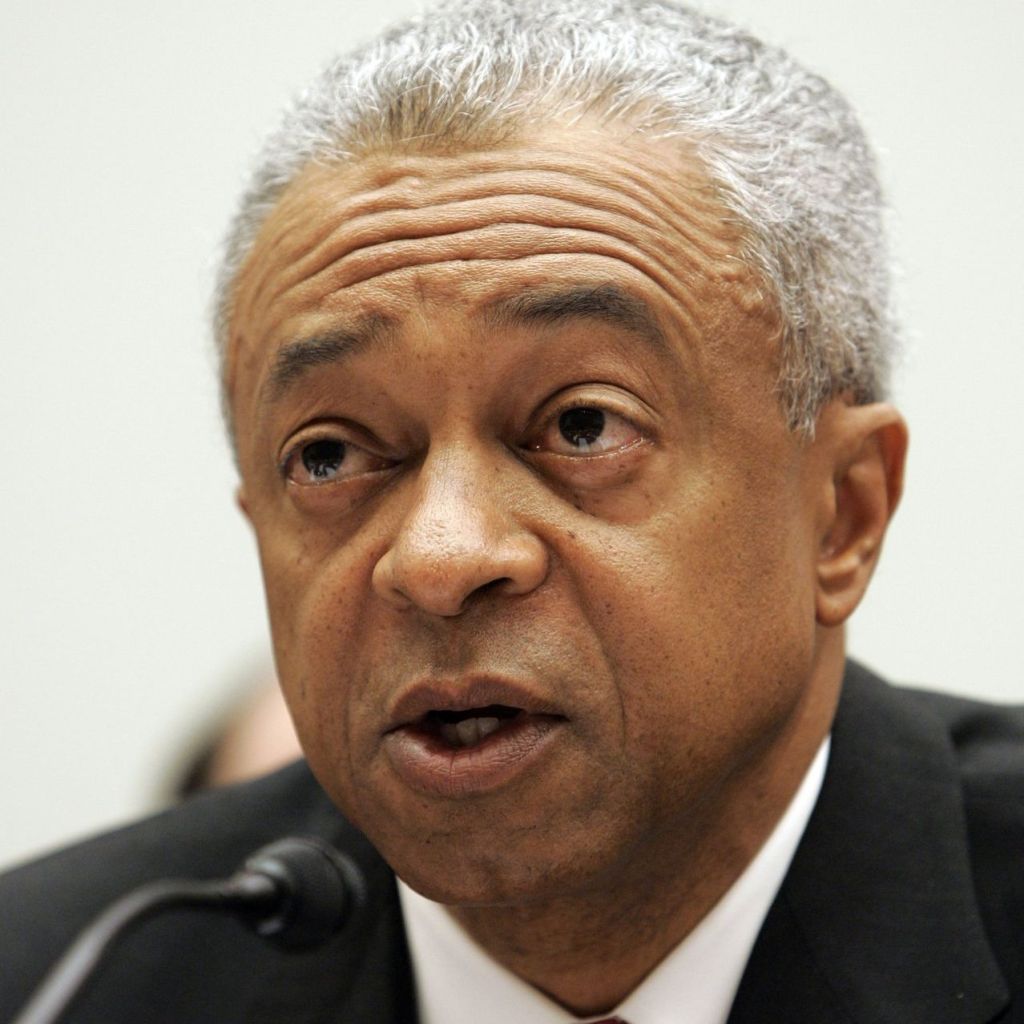
Leadership Profile: Stanley O’Neal

In October 2007, Merrill Lynch declared a $7.9 billion write-down due to their substantial dependence on mortgage-based collateralized debt obligations, trading partners’ loss of confidence in their solvency and a dubious ability to refinance money market obligations.[1] By September 2008, Bank of America had agreed to purchase Merrill Lynch for 0.8595 shares of Bank of America common stock for each Merrill Lynch common share.

This post will explore the leadership of CEO Stanley O’Neal and the extent to which his poor leadership decisions contributed to the 2008 crisis and sparked the sale of Merrill Lynch. By 2000, O’Neal was leading Merrill Lynch’s brokerage department as a result of his bold and proactive business initiatives. Despite his aggressive strategies, increasing respect amongst peers led to his appointment as Chief Operating Officer in 2001, making him the first African American leading a major Wall Street firm.

The CDO Market

Following O’Neal’s initial success and highly impactful proposals, his problems began with increased involvement in synthetic collateralized debt obligations (CDOs) consisting of pools of loans and credit default swaps. These complex products were originally developed by a team at J.P. Morgan in 1997 with the goal of reducing risk when loans were made to top-tier corporate borrowers.[2] Merrill Lynch’s increasing involvement in CDOs produced record earnings in the first quarter of 2007 facilitating O’Neal’s long-term obsession with beating Lehman Brothers, Goldman Sachs and Bear Stearns in profit growth.[3] As the year went on and the CDO market notoriously fell apart, other banks began to reassess their position. Meanwhile, Merrill Lynch became the largest underwriters in this product entailing a buying spree of 23 major residential and commercial mortgage-related companies.[4] Joseph Heller has approached the pattern of continuity in business operations from a psychological perspective arguing for the existence of a ‘powerful pressure individuals feel to appear consistent with certain prior commitments … the need to be consistent is ingrained in human nature’.[5] Therefore, instead of being adaptable, O’Neal was guided by Merrill Lynch’s commitment to the CDO market and failed to identify the urgent call for change other Wall Street firms were swiftly reacting to.

Leadership Style

O’Neal’s leadership style has attracted a variety of criticisms due to his ruthless nature, tendency to ignore the opinions of others, poor hiring decisions and detached persona. Alongside a lack of adaptability, O’Neal allowed his personal obsession with overthrowing Goldman Sachs to dominate CDO decisions and triggered his fearless appetite for risk. This insatiable hunger for increased profit margins required the meticulous reduction of expenses. While risk-taking is an essential and irrefutably inevitable aspect of the industry, had O’Neal welcomed the expertise of others Merrill Lynch’s over-exposure may have been prevented. O’Neal’s rash risk-taking can be recognized in his early leadership decisions encompassing an initial strategy of laying off 10,000 employees, disrupting the organizational culture and attempting to transform the entire business model.[6]

The inclination for O’Neal to trust solely his own judgement is illustrated through his personal selection of new executive team members who were usually close friends as opposed to objectively selecting qualified candidates. This pattern proved to be catastrophic for the future of Merrill Lynch and had detrimental consequences. The appointment of Ahmass Fakahany as co-president is a prominent example during his position overseeing the internal CDO team, credit and risk management. Prior to the position, Fakahany had contributed to administrative functions including human resources and computer systems. O’Neal overlooked this evident lack of experience in the securities industry due to his preference for subordinates who failed to offer opinions or oppose his decisions.

Consequences

The amalgamation of O’Neal’s poor decisions came to a head as the mortgage market faltered. The unregulated nature of CDOs had allowed questionable assets to be passed off as higher-quality goods which resulted in a false sense of security for banks and investors.[7] This false sense of security was illustrated clearly by the concerns of North Fork Bank who met with Stanley O’Neal on various occasions but were fearful that ‘there was a distinct possibility that they didn’t understand fully they own risk profile’.[8] Once O’Neal became aware of the catastrophic nature of Merrill Lynch’s problems, he set about trying to find solutions alone as opposed to consulting the board. Following the proposal of various mergers, the board discovered he had been including a separation package of $250 million if he was not permitted to lead the newly formed firm. Subsequently, O’Neal was forced into retirement in 2007 taking equity profits worth over $160 million.[9] Following the merger with Bank of America, Merrill Lynch continued to operate within wealth management before subsequent integration into BoA Securities.


[1] Joseph Heller, “Through Thick and Thin and Changing Data: The Innate Influence of Prior Predictions on Corporate Disclosures”, Securities Evaluations (2018) p.11.

[2] Gretchen Morgenson, Reckless Endangerment: How Outsized Ambition, Greed, and Corruption led to Economic Armageddon (Times Books, 2011) p.30.

[3] Gretchen Morgenson, Reckless Endangerment: How Outsized Ambition, Greed, and Corruption led to Economic Armageddon (Times Books, 2011) p.33.

[4] Kimberly Hardy, “Analysing Leadership Decisions: Stanley O’Neal and Merrill Lynch”, International Research Journal of Marketing and Economics (2016) p.33.

[5] Joseph Heller, “Through Thick and Thin and Changing Data: The Innate Influence of Prior Predictions on Corporate Disclosures”, Securities Evaluations (2018) p.3.

[6] Kimberly Hardy, “Analysing Leadership Decisions: Stanley O’Neal and Merrill Lynch”, International Research Journal of Marketing and Economics (2016) p.31.

[7] Kimberly Hardy, “Analysing Leadership Decisions: Stanley O’Neal and Merrill Lynch”, International Research Journal of Marketing and Economics (2016) p.30.

[8] Kimberly Hardy, “Analysing Leadership Decisions: Stanley O’Neal and Merrill Lynch”, International Research Journal of Marketing and Economics (2016) p.30.

[9] John Nirenberg, “A Multifaceted View of CEO Compensation and Performance: A Case Study”, Journal of Social Change (2018) p.53.

Mississippi during The Great Depression

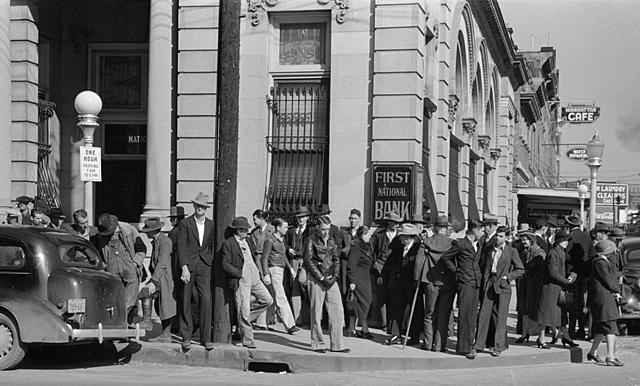
The Great Depression has been frequently described as ‘one of the greatest disasters in American history’ due to its disastrous impact on income, tax revenue, profits and unemployment.[1] Perhaps unsurprisingly, the adverse impacts on banks in Mississippi were relentless which becomes particularly apparent when considered in conjunction with the impact on national banks. The severity of this impact can be ascribed to the rural, impoverished characteristics of the state alongside the convoluted nature of policy implementation. Mississippi was divided into two Federal Reserve districts with conflicting policies surrounding liquidity provision which has been identified as a contributing factor to bank failures. In 1929 over 80% of people in Mississippi lived in a rural area vs 45% of the general population which illustrates how problematic it can be to generalize the impact of The Great Depression across states.[2]

Understanding the implications of The Great Depression in Mississippi has been an area of interest to scholars due to the uniquely localized business relationships and enduring co-dependency. The bank was undoubtedly a fundamental focal point of the townspeople’s lives with a weekly venture to town being the only alternative to storing cash under a mattress. Credit relationships had a tendency to be local which mitigated the likelihood of moral hazard and adverse selection since long-term relationships decreased the incentive of pursuing short-term gains. However, not all repercussions of localized business relationships were positive as credit rating agencies such as D&B have revealed through their Reference Books (1926-1935) that the highest credit ratings were reserved solely for firms with large net worth’s.[3]

The survival of one small bank; The First National Bank of Oxford, has been regarded as nothing short of a miracle particularly due to its founding only 20 years prior to The Great Depression. Against all odds, FNBO managed to ‘double the balance of its individual depositors’ accounts in the midst of the darkest months of the Great Depression’.[4] Irrefutably, a key factor in the survival of FNBO was the power and influence of small newspapers which contrasts significantly from the easy access to financial information available today. In line with the majority of small towns in Mississippi; there was only one newspaper. The Oxford Eagle was published weekly and displayed quarterly financial statements.[5]  The Eagle played an integral role in calming the citizens of Oxford, preventing bank runs and dictating where civilians were willing to put their trust.

Rescuing FNBO…

FNBO was forced to close in November 1930 directly resulting from their investments in Guaranty Bank & Trust whose failure outraged the Oxford community. The behaviour of Guaranty’s president, J. A. Smallwood, shocked civilians following the emergence of his $75,000 embezzlement charges illustrating the problematic repercussions of co-dependency between Mississippi banks.[6] In response to the undue closing of FNBO and their favourable media portrayal, the community collaborated to rescue the benevolent bank and preserve its legacy. The development of the ‘Love Plan’ entailed depositors exchanging 25% of their deposits for stock in the bank which would transfer ownership to depositors and provide sufficient cash for meeting immediate needs. Subsequently, in 1931, the Oxford Eagle outlined the plan for the remaining 75% of deposits to be gradually unfrozen: 10% within 30 days from the adoption of the plan, 15% within a year, 25% at the end of year two, and the final 25% at the end of year three. Once the majority of depositors had accepted the plan and met the  baseline requirement of holding a minimum of ten dollars in the Bank of Oxford the bank was reopened within five months.

Where is FNBO today?

While the spread of information today may rely on social media and digitization as opposed to newspapers, society still looks to the media in an attempt to attain clarity and transparency surrounding which corporations to trust.

FNBO’s short history indicates that as with the 2007 crisis, survivors of the Great Depression were not dictated by continuity or a rich history. Surviving banks had the capabilities to respond and adapt swiftly to the crisis with community support being the overwhelming advantage for FNBO. Furthermore, the practices of misleading credit ratings and selective credit relationships have been important characteristics of 21st-century financial crises.   

The First National Bank of Oxford’s tale of durability offers an important insight into the nature of the Great Depression in Mississippi and its impact on local communities. The story of FNBO remains a watershed in the history of the Great Depression since no other banks in Oxford were able to endure the hostile financial climate. FNB remains open today and proudly maintains its culture of offering a localized service and participates in a variety of community ventures.


[1] Eric Bostwick, “The Little Bank That Could: An Examination of the Historical and Financial Records of One Bank That Survived The Great Depression”, Accounting Historians Journal (Florida, 2019) p.17.

[2] Nicolas Ziebarth, “Identifying the Effects of Bank Failures from a Natural Experiment in Mississippi during the Great Depression”, American Economic Journal: Macroeconomics (2013) p.86.

[3] Mary Hansen, “Credit Relationships and Business Bankruptcy During the Great Depression”, American Economic Journal: Macroeconomics (2017) p.235.

[4] Eric Bostwick, “The Little Bank That Could: An Examination of the Historical and Financial Records of One Bank That Survived The Great Depression”, Accounting Historians Journal (Florida, 2019) p.17.

[5] Eric Bostwick, “The Little Bank That Could: An Examination of the Historical and Financial Records of One Bank That Survived The Great Depression”, Accounting Historians Journal (Florida, 2019) p.27.

[6] Eric Bostwick, “The Little Bank That Could: An Examination of the Historical and Financial Records of One Bank That Survived The Great Depression”, Accounting Historians Journal (Florida, 2019) p.17.

Introduction

Hello, welcome to my blog on Financial Institutions 1850-2020. I started this blog to consolidate my understanding of the industry. After studying history at the University of Exeter in the UK, I currently attend business school in Paris where I will shortly be graduating from my masters in International Business. While this blog is a hobby, exploring key financial topics enhances my commercial awareness and proves to be very useful in my post-graduation job hunt.

If you have any feedback or suggestions for future articles please get in touch – I would be very grateful.

Design a site like this with WordPress.com
Get started